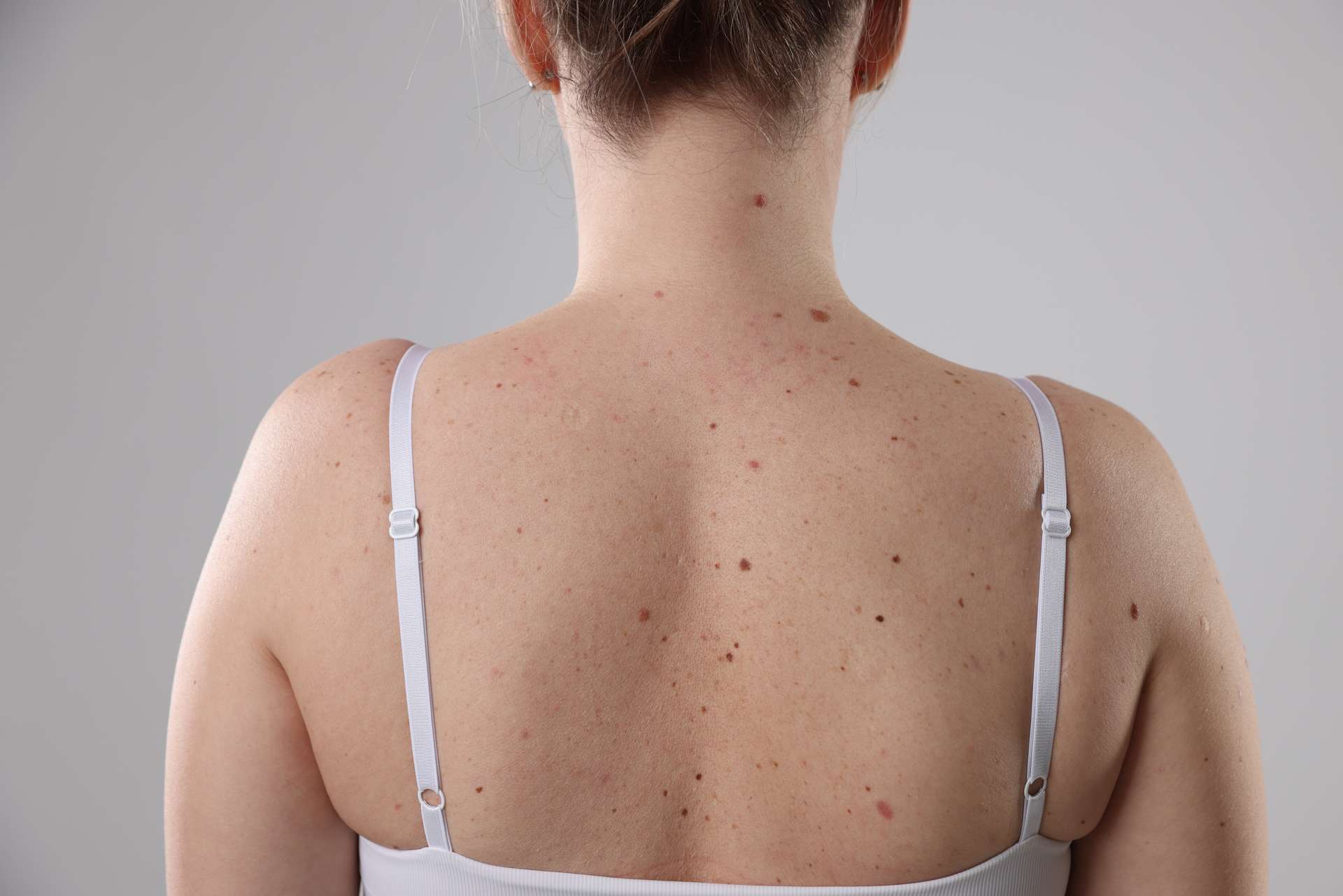
Moles are a nearly universal feature of the skin. While these small growths are usually harmless, they can harbor skin cancer if left unexamined. Regular self-examinations and professional skin evaluations are necessary to ensure the continued health of your moles.
At Worcester and Chelmsford Dermatology Associates, we are dedicated to providing our clients with both the information and dermatological care that they need to maintain healthy, beautiful skin. For more details about our practice or any of the services we offer, contact us today.
What Are Moles?
Moles are small, flat or protruding skin growths that nearly everyone has. In fact, most people have between 10-40 moles on their bodies by the time they reach adulthood. These skin features develop in shades of pink, brown, and black varieties, and are typically harmless. However, if exposed to prolonged sunlight, they have the potential to become cancerous. Understanding the way your moles are growing and changing can help you pick up on potential signs of skin cancer early.
What Causes Moles to Form or Change?
Moles form when melanocytes, the cells responsible for skin pigmentation, cluster together rather than spreading evenly throughout the skin. Most people develop the bulk of their moles during childhood and the teenage years, though new moles can appear well into adulthood.
Several factors influence how many moles you have and how they change over time:
- Genetics: If your parents have a higher number of moles, you’re more likely to as well
- Sun exposure: UV rays can trigger new mole formation and cause existing moles to darken
- Hormonal shifts: Puberty, pregnancy and hormone therapy can all prompt moles to appear or change
- Age: Moles evolve gradually throughout life, and some fade or flatten as you get older
- Skin tone: Fair skin tends to develop more moles and carries a higher risk of sun-related changes
Understanding what drives mole development gives you a clearer sense of what’s normal for your skin and what warrants a closer look.
Types of Moles
Not all moles are the same. Identifying the type of mole you have is one of the most important things done during an evaluation.
Congenital Moles
Congenital moles are present at birth or appear shortly after. They tend to be larger than moles that develop later in life and, depending on their size, may carry a slightly elevated risk of developing into melanoma. These moles are usually monitored closely from an early age.
Acquired Moles
Acquired moles are those that develop after birth, typically during childhood or adolescence, or in response to sun exposure. Most adults have between 10 and 40 of these, and the vast majority remain harmless throughout life.
Atypical Moles
Atypical moles, also called dysplastic nevi, look different from common moles. They tend to be larger, have irregular borders and display uneven coloring. Having one or more atypical moles doesn’t mean you have skin cancer, but it does mean we will likely want to monitor them more frequently.
Halo Moles
A ring of lighter skin surrounds Halo moles and are generally harmless, though sudden changes in a halo mole should still be evaluated.
Knowing which type of mole you’re dealing with helps determine how often it should be checked and whether any changes are cause for concern. During your exam, we can walk you through which category your moles fall into and set a monitoring schedule that fits your specific skin.
Moles vs. Other Common Skin Growths
Not every spot or bump on your skin is a mole, and telling them apart can help you know what to expect before your appointment.
Skin Tags
Skin tags are small, soft growths that hang slightly off the skin, often in areas where skin rubs against skin or clothing. Common areas for skin tags include the neck, underarms or eyelids. Unlike moles, they don’t carry pigment-related cancer risk and are removed for comfort or cosmetic reasons rather than medical monitoring.
Freckles
Freckles are flat spots of concentrated pigment that tend to darken with sun exposure and fade in the winter months. They stay flat and don’t grow the way a mole can, which is one of the easiest ways to distinguish the two.
Seborrheic Keratoses
Seborrheic keratoses are raised, waxy growths that often look like they were dripped onto the skin, typically appearing as people age. They are benign and unrelated to sun exposure, though they can be mistaken for moles due to their color and texture.
If you’re ever unsure what a particular growth is, a professional evaluation is the most reliable way to confirm it, especially since some conditions can resemble one another closely enough to warrant a closer look.
The ABCDE Warning Signs to Watch For
Not every change in a mole signals a problem, but certain patterns are worth monitoring closely. Dermatologists use the ABCDE method to help patients evaluate their moles during self-exams.
- Asymmetry: One half of the mole doesn’t match the other in shape or size
- Border: Edges appear blurred, notched, or irregular rather than smooth
- Color: The mole contains uneven shading, with patches of black, brown, tan, red, or blue
- Diameter: The mole measures larger than 6 millimeters, roughly the size of a pencil eraser
- Evolving: The mole changes in size, shape, color, or texture over weeks or months
A mole doesn’t need to meet every criterion to be concerning. Even one of these changes is reason enough to schedule an evaluation. Catching these signs early is one of the most effective ways to identify skin cancer, including melanoma, while it’s still highly treatable.
What to Expect During Your Appointment
Evaluation
While moles can develop at any stage of life, most of them form during childhood and adolescence. A mole changing in size, shape, or color during childhood is a normal part of development, but the same changes in adulthood could be early indicators of skin cancer or disease.
It’s important to perform regular self-checks on your skin and undergo yearly examinations by a trained dermatologist. This ensures that you’re keeping tabs on any changes that take place in your moles, and are better able to catch skin cancer early, so it can be treated quickly and effectively.
Treatment
While moles are harmless the majority of the time, they have the potential to become cancerous. If you have one or more moles that have begun to change in size, shape, or color, you should seek medical attention immediately. One of our trained dermatological specialists can examine your mole carefully and decide if it needs to be removed. Moles can also be removed for aesthetic reasons. They can develop in particularly noticeable areas or be located in places where they rub uncomfortably against clothing.
Removing a mole is a relatively straightforward and uncomplicated procedure. The treatment area is first numbed to improve patient comfort. Once it has been thoroughly numbed, the mole is scooped out of the skin using a scalpel. If the mole was suspected of being cancerous, it is usually sent to a lab for further identification and testing. When the wound heals, the color of the mole usually remains while the raised portion is entirely removed.
Side Effects and Recovery
Mole removal is a minor procedure, and most patients recover quickly with few complications. Common side effects include:
- Mild redness or swelling around the treatment site
- Slight tenderness for a few days
- Temporary scabbing as the area heals
- A small scar, which typically fades significantly over several months
Following the aftercare instructions you receive helps minimize scarring and supports proper healing. This usually includes keeping the area clean, applying an ointment and protecting it from sun exposure.
If stitches were used, they’re typically removed within 1 to 2 weeks, depending on the location. Shave excision sites tend to heal faster since the wound is more superficial.
Contact us if you notice increasing redness, warmth, drainage or fever, as these can be signs of infection. Otherwise, mild irritation and gradual fading of the scar are a normal part of healing.
Medical vs. Cosmetic Mole Removal
Mole removal generally falls into one of two categories, and knowing which applies to you can help set expectations for your visit.
Medical removal is recommended when a mole shows signs of the ABCDE warning criteria, has changed noticeably, or is otherwise suspected of being cancerous. In these cases, removal is considered a medical necessity, and the tissue is typically sent to a lab for evaluation.
Cosmetic removal applies to moles that are healthy but bothersome for other reasons, whether they catch on clothing, sit in a visible spot or simply aren’t something you want anymore. These moles don’t require biopsy, though many patients still choose to have the tissue examined for peace of mind.
Because the distinction affects both the recommended method and how the visit may be covered, it is worth discussing your specific mole during your consultation. Many patients come in unsure which category their mole falls into, and that’s a normal part of the conversation you can expect to have at your visit.
Cost of Mole Removal
The cost of mole removal depends on several factors, including the size and number of moles being treated, the removal method used, and whether the procedure is classified as medical or cosmetic.
Medically necessary mole removal is often covered in part or in full by insurance. Cosmetic mole removal is generally considered elective and typically paid for out of pocket.
During your consultation, we will evaluate your mole, recommend the appropriate removal method, and help you understand what to expect in terms of cost based on your specific situation.
Candidates For Mole Removal
Most adults are candidates for mole removal, whether the goal is to address a medical concern or to remove a mole that bothers you cosmetically.
You may be a good candidate for medical mole removal if:
- Your mole has changed in size, shape, or color
- A mole exhibits any of the ABCDE warning signs
- Your dermatologist has identified a mole as atypical during a routine exam
- You have a personal or family history of skin cancer
You may be a good candidate for cosmetic mole removal if:
- A mole causes discomfort by rubbing against clothing or jewelry
- You’d prefer a smoother, more even skin appearance
- A mole sits somewhere you find distracting or self-conscious
During your consultation, we will evaluate your mole, review your medical history and confirm the safest removal approach for your skin. Whether you’re addressing a single mole or several, your plan will be built around what’s actually growing on your skin, not a one-size-fits-all protocol.
Mole Removal FAQs
Will my mole grow back after it’s removed?
Once a mole is fully removed, it typically does not grow back. In rare cases, some pigment can return to the treatment area. If this happens, or if you notice any new changes at the site, let us know so it can be evaluated.
Does mole removal hurt?
Most patients feel only a brief pinch from the numbing injection. Once the area is numb, the removal itself is not painful. Mild soreness for a day or two afterward is common and generally manageable without prescription medication.
Will mole removal leave a scar?
Some scarring is normal after mole removal, though the size and visibility depend on the removal method, the mole’s size and your skin’s healing tendencies. Most scars fade considerably over several months.
How long does it take for a mole removal site to heal?
Most mole removal sites heal within one to two weeks, though this can vary depending on the size of the mole and where it’s located on your body. The treatment area typically forms a light scab that falls away on its own as new skin forms underneath. Any redness or discoloration at the site usually continues to fade for several months after the wound has closed.
How often should I have my moles checked?
Most people benefit from an annual skin exam with a dermatologist, along with monthly self-checks at home. If you have a family history of skin cancer or several atypical moles, we may recommend more frequent visits.
Can I prevent new moles from forming?
There’s no way to fully prevent new moles from developing, since genetics and hormonal changes play a large role. Wearing sunscreen daily and limiting prolonged sun exposure can help reduce the number of new moles that form over time and lower your overall skin cancer risk.
Why Choose Worcester and Chelmsford Dermatology Associates For Mole Removal?
Mole evaluation and removal at Worcester and Chelmsford Dermatology Associates is guided by Dr. Seth Kates and Dr. A. David Simkin, both experienced dermatologists who treat skin conditions ranging from routine mole changes to skin cancer.
Every exam includes a thorough evaluation of your skin, with attention to any moles that show signs of change. Whether your concern is medical or cosmetic, your treatment plan is tailored to your specific skin and goals, with clear communication about what to expect at each step.
With offices in both Worcester and Chelmsford, ongoing skin monitoring fits easily into your schedule, whether you’re coming in for a single mole check or returning for annual exams year after year. From initial evaluation through removal and follow-up care, the focus remains on accurate diagnosis, minimal scarring, and results you can be confident in.
Take the Next Step Towards Mole Removal
Whether you’ve noticed a mole that has changed or you’re ready to have one removed for cosmetic reasons, a proper evaluation is the best place to start. Scheduling a visit is simple, and both Worcester and Chelmsford offices are ready to fit your exam into your routine, whether that’s a single mole you’d like checked or your annual skin exam.
Interested in having your moles checked out? Don’t hesitate – contact Worcester and Chelmsford Dermatology Associates today to schedule a skin examination or mole removal appointment. You can request a consultation online or call us at 508-744-3055 in Worcester or 978-705-6511 in Chelmsford.